

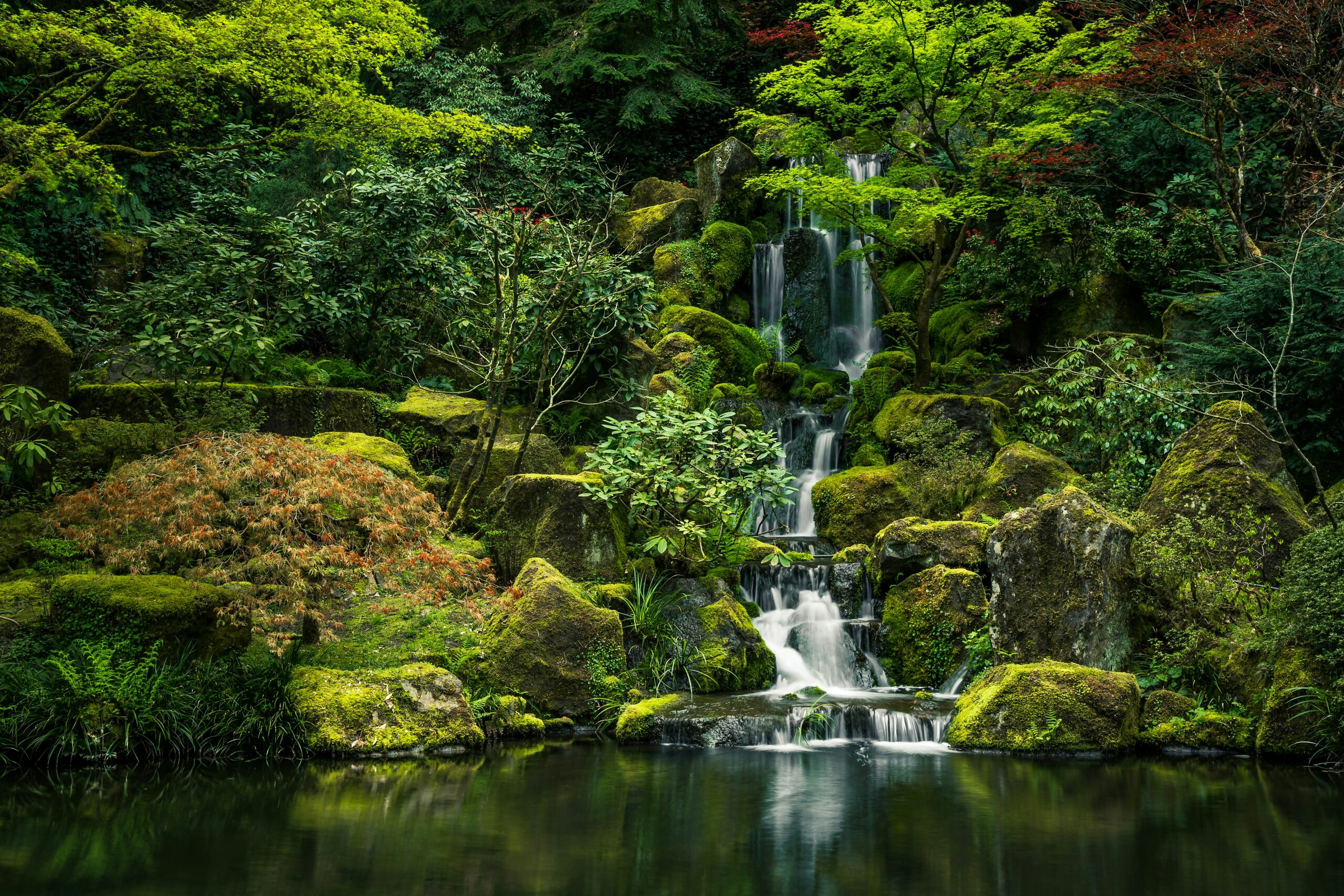
Photo by Cody Weaver with Unsplash
I recently traveled to Japan on a two-week vacation with several family members.
One day in Hiroshima, we visited a traditional Japanese garden immediately after touring the Peace Museum, where the stories and photos of human suffering from the first atomic bomb drop were etched into my consciousness.
I had been looking forward to visiting the Japanese gardens—with their distinctive designs—for months. On this particular day, I was especially eager, hoping the garden would offer a respite from the devastation I had just witnessed at the museum.
As we entered the garden, we were invited to take a guided tour. Our prospective guide was clearly passionate about the place and eager to share her love and knowledge of it with us. So, we agreed to the tour.
Just a few minutes in, however, I noticed I was feeling a low level of annoyance and resentment toward our guide and even my traveling companions, who had joined me in deciding to accept the tour. Naturally, I was curious about these unwelcome emotions.
Without consciously realizing it beforehand, I had been deeply longing to experience the garden.
I wanted to absorb its healing and restorative qualities—the lake teeming with fish and turtles, the sound of the brook tripping over rocks in its path, and the birds flitting about the treetops and bushes.
I was drawn to the sight of the tall bamboo forest swaying gracefully and majestically in the summer breeze, the smell of green grass and slightly past-peak gardenia blooms, and the thoughtful design elements throughout the space.
These included arched footbridges, a wooden rowboat tucked away in the corner of a pond, small stone artifacts scattered throughout, and large boulders placed with care and intention by the garden’s designers decades earlier.
However, instead of experiencing the beauty of the garden at the core of my being, I was hearing information about the garden. Instead of the garden being with me and in me, I was learning facts and figures, dates and details.
To be clear, I was not a victim here. I had contributed to the decision, and this may have been exactly what others who came to the garden were looking for from their excursion. But I was yearning for an experience—a felt sense of peace and tranquility.
What was on offer in lieu of experience was data.
As my mind inevitably wandered from the information being shared, I found myself reflecting on where I (or you) may be defaulting to information sharing when we could be creating more powerful experiences for clients or prospective clients.
So, for you, I offer these questions:
- If you’re a financial advisor, attorney, or other professional, where might you be providing technical information when what the client or prospect most needs is to experience you—your heart, your uniqueness, your essence?
- If you’re leading others, where do you default to yet another training for your team when a one-on-one personalized coaching or mentoring experience with you might be exactly what is called for?
- If you’re running a business, how aware are you of your client or customer’s felt sense of working with your company, your people, your products, or your services?
- If you’re in sales, where might you be telling prospects about your product or service when you could be creating a powerful experience of it for them?
- If you’re an individual looking to grow or tell a new story about who you are, where are you looking to an expert or class for more information when you may be better served by jumping into the arena—trying something new that might not work, or running an experiment?
Yes, information has its place. It’s cheap and easy to acquire and pass on. But creating an experience—curating a human interaction with care and intention for the sake of helping another person feel something powerful? That is challenging, generous, and kind.
I welcome your thoughts, questions, or comments. You can connect with me at keith@voyagercoachconsult.com.